A New Frontier in Healing: amfAR Expands Mission to Combat Cancer
In a significant expansion of its long standing research mission, the global health organization amfAR has announced its first ever investment in cancer research. Building on more than 40 years of scientific discovery dedicated to the prevention, treatment, and eventual cure of HIV, the organization is now applying its unique model of supporting high risk, high reward ideas to a broader spectrum of biomedical challenges. This strategic shift marks a critical step in the organization commitment to improving global health through a focus on accessibility, affordability, and scalability. By pivoting toward this new horizon, the organization seeks to translate the specialized knowledge gained from decades of studying infectious disease into the complex landscape of oncology, aiming to provide solutions for some of the most daunting medical problems of the modern era.
Investing in Innovative Immunotherapy
The organization has awarded 1.44 million dollars in grants to three pioneering projects, each receiving 480000 dollars over a two year period. These grants support researchers at the Memorial Sloan Kettering Cancer Center, The Rockefeller University, and the University of Milano-Bicocca. Each of these institutions serves as a hub of medical excellence, where dedicated teams work to uncover the fundamental mechanics of human disease. The selected projects focus on innovative approaches to cancer immunotherapy, a field that seeks to harness the body own immune system to identify and destroy malignant cells. This area of study represents a major shift in how medicine approaches terminal illness, moving away from blunt instruments and toward precision tools that enable the body to heal itself. Two of the funded studies are investigating new methods to overcome T cell exhaustion, which is a condition where immune cells lose their effectiveness in fighting disease and fail to eliminate cancer cells as intended. The third project explores novel ways to make tumors more susceptible to immune system attacks, which is an essential step in ensuring that patients can benefit from modern therapeutic breakthroughs.
Lessons from the HIV Epidemic
The decision to expand into cancer research is rooted in the belief that the knowledge gained from the HIV epidemic can provide a blueprint for other medical breakthroughs. According to amfAR CEO Kyle Clifford, the approaches developed through decades of HIV research have already fundamentally changed modern medicine. Clifford noted that advancements such as Covid vaccines, existing cancer immunotherapies, and the concept of person first healthcare all originated from the global response to the HIV epidemic. This history of success underscores the importance of funding research that might be considered too risky by traditional grant makers. By applying these proven methodologies to cancer, the organization aims to accelerate the development of treatments that can benefit millions of people worldwide, proving that the tools used to manage a global virus can be repurposed to address the cellular malfunctions that drive cancer.
A Commitment to Global Health
This new initiative represents more than just a diversification of research interests. It reflects a broader commitment to addressing the most pressing health issues facing the global community. By focusing on research that prioritizes scalability and affordability, amfAR intends to ensure that the fruits of these scientific endeavors are accessible to diverse populations rather than being limited to specific regions or socioeconomic groups. As the organization moves forward, it continues to leverage its history of backing bold, untested ideas to push the boundaries of what is possible in biomedical science. This commitment remains the driving force behind their mission to foster health equity across the globe through rigorous scientific inquiry and persistent advocacy. This report draws on reporting originally published by amfAR.
Source: amfAR.
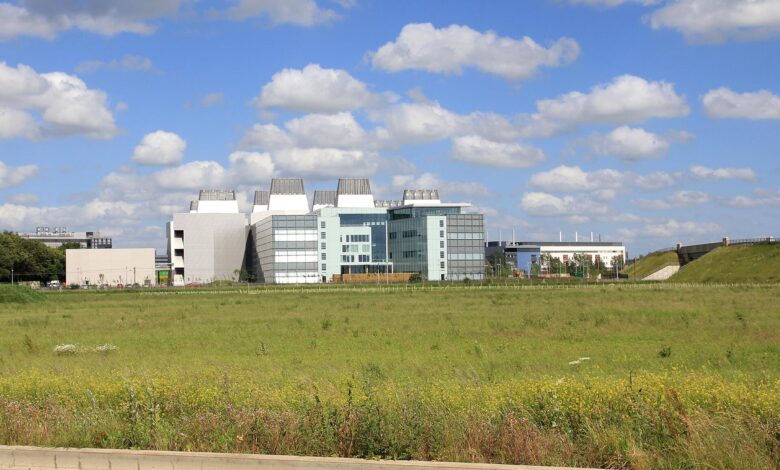
Photo: Medical Research Council, Laboratory of Molecular Biology geograph.org.uk 3016826 Credit: David P Howard (CC BY-SA 2.0). Photo source and permissions.
Prepared by the Global Impact Magazine AI assisted news desk from the cited sources.